
Açaí brand Sambazon in November acquired fellow super-fruit player Pitaya Foods to expand its retail footprint in the U.S.
The acquisition price was undisclosed.
With San Diego-based Pitaya Foods, Sambazon’s retail distribution for its frozen products expands by 20%. The San Clemente-based company also expects the recent addition to lead to 45% annualized revenue growth over the next 12 months.
Sambazon, founded in 2000, manufactures açaí products sold in most major grocery stores including Costco, Whole Foods Market and Albertsons.
Pitaya was founded in 2010 by Chuck Casano, with a focus on pitahaya, or dragon fruit, from Nicaragua. Casano and co-founder Ben Hiddlestone began distributing the fruit to juice bars in San Diego before launching their first dragon fruit smoothie pack in 2013.
Since then, Pitaya has added six more superfruits, including jackfruit and passionfruit, to its offerings as well as new products such as smoothie bowls and sorbets. The brand can also be found in major stores such as Target, Walmart, Sprouts and Whole Foods.
Both Sambazon and Pitaya work with family farms and harvesters to source their fruits from Brazil, Chile and Peru.
Whipstitch Capital served as the exclusive financial advisor to Pitaya Foods, and Casano has been named executive vice president of sales. Sambazon said the deal brings the newly combined brands to nearly 70% of grocery stores in the U.S.
The açaí bowl maker also operates 14 brick-and-mortar stores in high-traffic locations, such as universities, stadiums and airports, including a spot at John Wayne Airport. This includes one mini kiosk that opened in 2024, which only requires one to two employees to operate.
Sambazon hasn’t expanded this format but is instead focusing on opening more high-profile airport outposts, with plans to open 10 over the next 12 months.
“We spent 26 years building a business around açaí and the belief that commercial success, care for people and protection of the places we source from are linked together,” co-founder and CEO Ryan Black said. “Açaí remains the anchor of our business. This acquisition builds on that foundation and advances our long-term vision for tropical superfruits.”
Kura Sushi Turns to Value Deals to Recapture Traffic
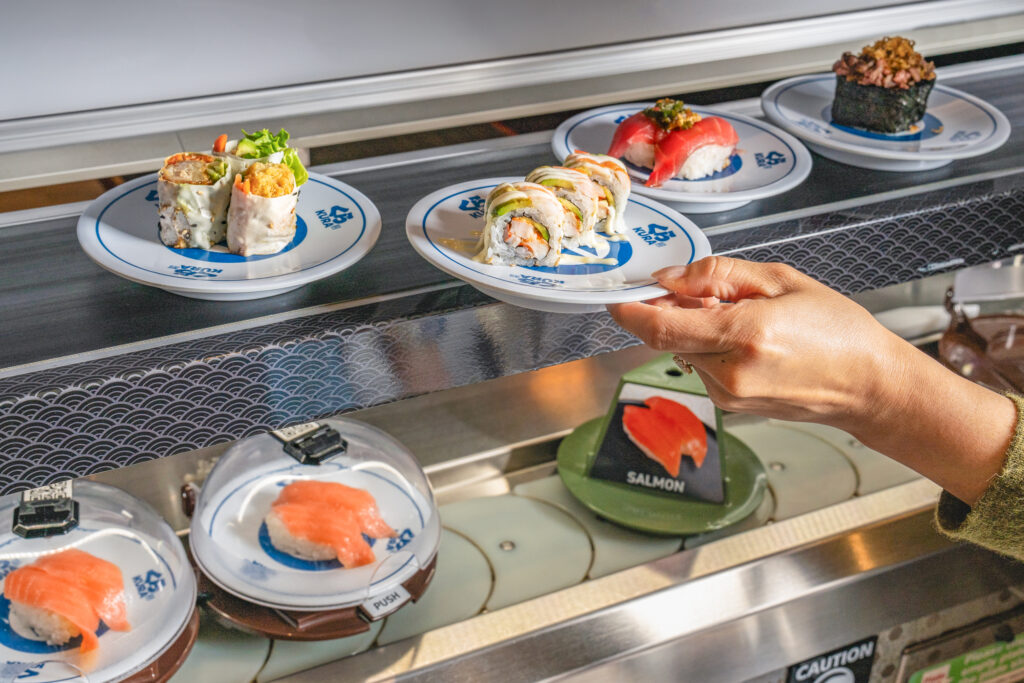
IRVINE— Kura Sushi USA is testing value meals to lure customers back to its revolving sushi restaurants after declining traffic and rising prices weighed on its latest quarterly results.
The Irvine-based chain (Nasdaq: KRUS) reported a 5.7% decline in same-store sales during its fiscal fourth quarter, a drop driven by declining foot traffic during lunch, where prices have gone up.
“Our average check is $29,” Chief Executive Hajime “Jimmy” Uba told analysts during a Nov. 5 earnings call. “When you think about that as a lunch ticket, it is not as affordable as some of the other options.”
An August consumer study revealed that the chain was losing customers during weekday lunch hours. That prompted it to test two value combos priced at $9.99 and $11.99 among rewards members over three days in October.
The company plans to expand the test to more restaurants this month, with the goal of attracting first-time customers.
Uba told analysts that the company was surprised by the traffic decline. “But the good news is that we have been able to drill down into the time or the day parts where we are seeing that traffic pressure as well as the opportunities that we have to reverse it.”
Kura Sushi opened 16 new restaurants during fiscal 2026, increasing 20% year-over-year. The company operated 98 locations as of Nov. 5 and expects to open its 100th in December.
Total annual sales were $328 million, a 16% increase from a year ago, but below Kura Sushi’s forecast of $330.5 million or more.
“As we look back at our fiscal ‘26, I am proud of our efforts to protect margin, in spite of the tariffs and the consumer headwinds,” Uba said.