
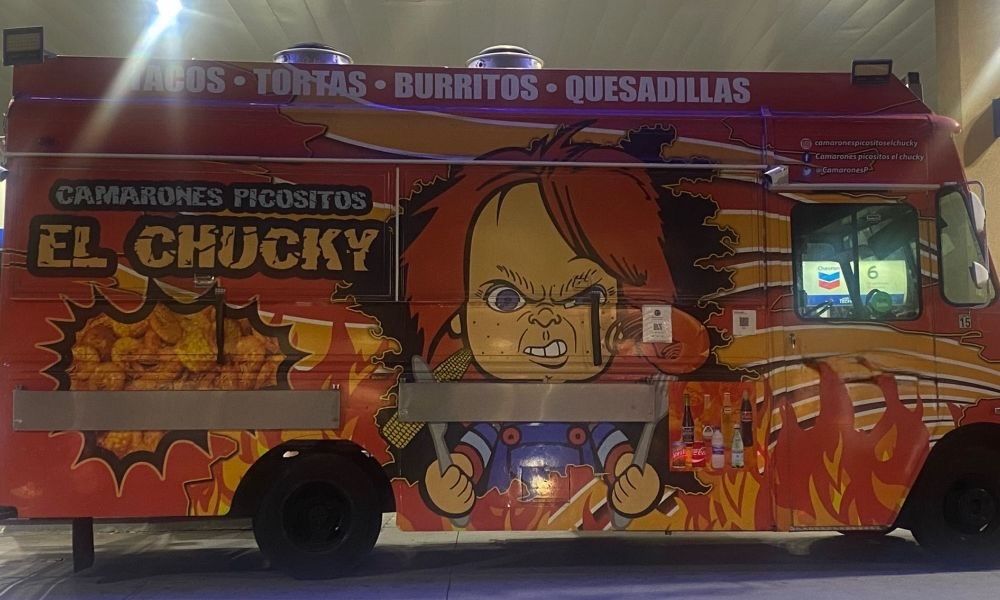
The Trump administration has declared war on fraud, which is hysterical considering the President was convicted on 32 counts of criminal fraud in New York in 2024. And judging by the latest target, apparently the war has reached… a Santa Ana food truck. And it’s not the Chucky Truck I see most Wednesday’s at the Tustin Farmer’s Market but I did hire this truck to cater aparty at my house after my son’s wedding two years ago (and I don’t think Elmer and Veronica will mind — wonderful people).
Federal prosecutors recently indicted the owner of a Santa Ana-based fruits-and-vegetables food truck, alleging the owner fraudulently trafficked hundreds of thousands of dollars in SNAP benefits. The indictment alleges the business generated unusually high electronic benefit transfer transactions and that the owner used the proceeds for personal expenses. It is a legitimate case if the allegations are proven — stealing taxpayer-funded benefits is wrong, whether the money is taken from a food truck operation or a Fortune 500 company.
But here’s where the Trump administration’s much-ballyhooed “war on fraud” gets interesting.
The administration created its Task Force to Eliminate Fraud with Vice President JD Vance in charge, promising to protect taxpayers from fraud, waste and abuse. Trump has repeatedly portrayed California as a hotbed of government fraud. The White House has even created a “Fraud Tracker” touting billions of dollars in alleged savings.
So naturally, one of the administration’s high-profile California fraud victories is a food truck.
Meanwhile, some considerably larger fish have been swimming away.
In April, federal prosecutors secured a guilty plea from a California fraudster accused of submitting $270 million in false reimbursement claims. A $270 million fraud case is roughly 1,000 times more consequential than a few hundred thousand dollars in SNAP fraud. The administration proudly lists that case among its accomplishments — but the contrast is hard to miss when the public-relations spotlight falls on a small Santa Ana vendor.
And then there’s the truly awkward part.
The Trump Justice Department has simultaneously been pulling back from corporate criminal prosecutions. Reporting by The Wall Street Journal found that the department has declined to charge companies in cases involving alleged corporate misconduct at companies including Alibaba, EagleBank and Abbott Laboratories, with some matters resolved through settlements or other arrangements instead of criminal charges.
The administration also dropped the criminal fraud and bribery case against billionaire Gautam Adani, prompting a federal judge to call aspects of the Justice Department’s decision concerning. Adani had been accused of bribing Indian officials and misleading U.S. investors — allegations he and his company denied.
And Trump’s own pardon pen has been extraordinarily generous to people convicted of financial crimes. Former Nikola CEO Trevor Milton, convicted of securities and wire fraud after investors lost hundreds of millions of dollars, received a presidential pardon. Other Trump clemency recipients had restitution obligations erased as well.
That’s some impressive flexibility in the definition of “tough on fraud.” If you’re a small business owner allegedly gaming the SNAP system, congratulations: Uncle Sam has your number. If you’re a billionaire accused of a massive international bribery scheme, perhaps things get a little more… nuanced. And if you’re a wealthy individual who has already been convicted of defrauding investors or taxpayers, there may even be a pardon waiting for you whre you don’t have to pay back the money scammed.
The hypocrisy isn’t that the Santa Ana food truck case exists. Fraud should be prosecuted. The hypocrisy is pretending that prosecuting a comparatively small benefits case somehow demonstrates a consistent, fearless campaign against fraud while the administration simultaneously backs away from major corporate prosecutions and grants clemency to convicted fraudsters.
Fraud is fraud. The dollar amount shouldn’t determine whether the government cares — but if we’re talking about protecting taxpayers, shouldn’t the biggest losses get at least as much attention as the easiest headlines? Apparently, in Trump’s America, the message is simple: if you’re going to steal from taxpayers, don’t be a food-truck owner. Because the bigger you are, the more likely the Trump Justice Department seems to find a reason to call it complicated.