
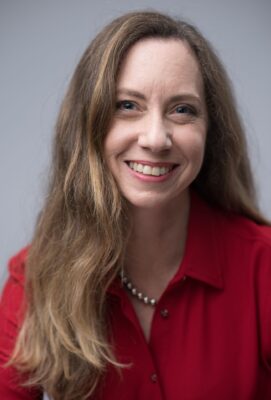
Dr. Kathleen TresederAfter four years on the Irvine City Council, Dr. Kathleen Treseder has become the kind of politician she promised voters she would replace. In November, voters in District 6 should elect a new voice.
In 2022, Dr. Kathleen Treseder came to Irvine voters as a scientist, environmental advocate and reformer. She had helped champion community-choice energy and presented herself as someone who would bring accountability, transparency and evidence-based decision-making to City Hall.
That was an appealing message.
Irvine deserves elected officials who challenge entrenched interests, ask difficult questions and put residents ahead of political insiders.
But reformers must be judged by what they do after they take office, not just by the promises they make on the campaign trail. Four years later, Treseder’s record raises a troubling question: Has a candidate who once promised better government become a politician increasingly consumed by personal disputes, public confrontations, vendettas and a sense of grievance?
From the Orange County Power Authority (OCPA) to the Irvine Community Land Trust (ICLT), from her handling of public criticism to the unanswered questions surrounding the FBI investigation she told voters she was a witness to, and a personal friendship with a fellow council member later charged with felonies (what did you know and when did you know it), a pattern has emerged that deserves serious scrutiny before ballots are counted on November 3.
Four years ago, I texted then-candidate Treseder regarding an”open letter” she wrote on the Orange County Power Authority. It was referenced in a post by The Voice of OC. It wasn’t published in the post, and I wanted to read it, so I texted to ask for a copy. She responded “Thank you for asking but it’s not public.” I wrote back, The Voice of OC says it is. Are they lying. She replied “I don’t think they’re lying, just mistaken. That’s why you can’t find it anywhere. It’s not public.” My reply was “But you’re not correcting the record are you? So this is just secret information that we are supposed to trust you it’s accurate? Do they have a copy of your letter?” Her last reply: “Ok, that’s enough.” She hasn’t repsonded to a single text since. An onion has thicker skin.
This is not an argument against environmental protection, affordable housing or public accountability. Those are important goals. It is an argument that Irvine needs a councilmember who can pursue them through sound policy, consistent standards and professional conduct—not through ultimatums and political feuds. “If you don’t do what I want, I’m holding my breath until I turn blue” is not a solid basis for political debate. It works for OCPA, but not ICLT. I wouldn’t let my kids get away with that, and they’re both adults today. So why would I let a city council member do so?
The Orange County Power Authority: From champion to ultimatum
Treseder was once a leading advocate for the Orange County Power Authority, the community-choice energy agency created to give participating communities more control over their electricity purchasing and renewable-energy options. But problems emerged early, including questions about transparency and the appointment of Brian Probolsky as CEO. Treseder’s frustration became an ultimatum: Irvine should not remain in OCPA while Probolsky remained in charge. In December 2022, she said she could not in good faith allow Irvine to remain in the agency as long as Probolsky was CEO. In February 2023, after the OCPA board rejected a proposal to bring in outside attorneys to help replace him, she moved toward withdrawing Irvine from the organization.
These were serious disagreements about a public agency’s governance. They deserved serious scrutiny. But they also illustrated the danger of allowing one personnel dispute to become the defining test of an entire public policy.
Probolsky ultimately left OCPA in 2023. Yet his departure did not automatically resolve every concern about the agency’s management, culture or operations. Questions about the people and management structure that remained also deserved examination. The appropriate response was sustained oversight: independent review, transparent performance standards, financial accountability and measurable improvements. Threatening withdrawal unless a particular executive was removed was a much narrower approach. Irvine residents should ask whether the goal was to repair an institution or to win a fight over its leadership.
The FBI investigation: Serious questions, but where is the follow-through?
Treseder also spoke publicly about an FBI investigation involving corruption in Irvine. She openly discussed her role as a witness to an FBI investigation. But no one knows what the case was about. The FBI doesn’t comment on the status of an investigation – if one exists, what the nature of it is, or if it’s been completed. What Treseder didn’t tell voters is how often she contacted to FBI to convince them to investigate. That comes from people interviewed by the FBI.
And while one might think it had to do with the case against political consultant Melahat Rafiei, it was more about Treseder’s perceived corruption with OCPA in which she once speculated that Rafiei was a shadow CEO at a public speech at an Anaheim church (two separate PRAs regarding Rafiei and OCPA revealed not a single document tying the two together. And the video is still on Facebook for anyone to view). But it made a plausible story, even if the timing and interactions did not make sense.
In March 2023, Treseder announced that FBI agents had interviewed Irvine City Manager Oliver Chi. Chi confirmed that agents had asked him questions about an ongoing investigation involving issues in and around Irvine andthat Chi was entitled to “whistleblower status.” Nothing happened. It’s been more than three years, so put this under the “nothing to see here” category.
Residents deserved answers about possible corruption and assurance that their city government was cooperating with federal authorities. But there is an important distinction between reporting an investigative development and turning that development into a continuing political narrative without demonstrable new information. Federal investigations are often confidential. No responsible person should demand disclosure of protected investigative information or treat silence as proof of wrongdoing. Nevertheless, voters can reasonably ask what policies, safeguards or accountability measures Treseder has advanced since those early developments. If the concern was institutional corruption, the objective should be lasting safeguards that survive any particular investigation. Residents need accountable government, not an endless cycle of insinuations and unanswered questions.
Public meetings are not a personal stage
The most revealing measure of an elected official may be how that official responds when constituents disagree.
Irvine’s public meetings have become contentious, particularly over Israel and Gaza, public demonstrations and Treseder’s proposed restrictions on residential protests. There have been heated exchanges and deeply uncomfortable moments — andthat’s just between the 5 democrats on the council. Elected officials are entitled to take threats seriously, and no resident has a right to threaten violence against a public servant. But residents also have a right to criticize their representatives. That right does not disappear because the criticism is angry, politically inconvenient or directed at someone who believes the speaker is aligned with another councilmember.
Treseder has repeatedly left the dais during contentious public-comment sessions. Reporting by Voice of OC documented her departure from meetings during the Israel-Gaza controversy, including instances when other councilmembers left alongside her. Treseder explained that she had received threats and did not intend to continue engaging with people who threatened her.
The distinction matters. Leaving a room because of a credible, immediate safety concern is understandable. Routinely withdrawing from public engagement when criticism becomes uncomfortable is a different matter. City Hall is a limited town square. City council members are not in a position to draft policy on Israel and Gaza. But residents waned to be heard. I will credit then Mayor Farrah Khan, a muslim, and Mayor Larry Agran, a jew, for deciding they would listen evenif they could do nothing but that.
The same concern applies when officials characterize speakers as aligned with political opponents. Perhaps those relationships exist; perhaps some speakers are pursuing partisan agendas. But the public-comment microphone belongs to residents, not to the council majority or minority. A constituent’s argument should be answered on its merits, not dismissed because of a perceived political association. An elected official’s responsibility is to listen, respond and govern—even when the audience is hostile.
Death threats deserve attention. So does public accountability.
Treseder has said she received death threats and reported them to Irvine police. That is a serious claim, and nobody should trivialize threats against elected officials. It was a page one story in Sunday’s New York Times.
However, residents also deserve accurate information about the police response. Recent local reporting has quoted an Irvine Police Department spokesperson as saying there was no active investigation into any credible threat. That is not the same as proving that Treseder fabricated threats, nor does it establish that every report she made was false. Without the underlying police records and complete context, it would be irresponsible to claim otherwise. The legitimate question is how the claims were presented publicly and whether they were used to explain a broader withdrawal from difficult public discussions.
Public service can be unpleasant. It can mean facing criticism, answering angry questions and sitting through speeches that challenge one’s judgment. Safety must come first when a genuine threat exists, but the existence of controversy cannot become a blanket excuse for avoiding constituents. Voters should expect both personal safety and public accountability.
What does Irvine get for its investment in council offices?
Another issue deserving scrutiny is the cost and structure of council-office staffing. Irvine’s official compensation figures show that in 2025, most full-year councilmembers received $10,560 in annual salary, while the city’s reported total employment cost for Treseder was $20,733.24, including the listed automobile allowance and pension costs. The much larger staffing budgets and personnel costs associated with council offices deserve their own transparent accounting.
Concerns have been raised about a City Hall employee of Treseder’s whose compensation reportedly increased by more than $50,000 over three years and approaches $200,000 annually. Before drawing a conclusion about that employee’s pay, voters should examine the employee’s identity, job classification, salary history, benefits and responsibilities against official payroll records. The figures should be independently verified rather than accepted as a campaign talking point. But the broader question is entirely appropriate: Are council offices staffed efficiently, and are taxpayers receiving measurable public value from those expenditures? Treseder did vote to increase the number of paid meetings the OCPA board could hold monthly –netting an extra $300 per meeting. Is this necessary? A councilmember who champions accountability should welcome that scrutiny. The standard should apply to her own office as rigorously as it applies to agencies and officials she criticizes.
See: City of Irvine’s official compensation information.
Tammy Kim: A friendship that raises questions, not assumptions, and deserves answers
Former Irvine councilmember and vice mayor Tammy Kim was charged by the Orange County District Attorney’s Office in May 2025 with 10 felonies and one misdemeanor tied to allegations that she misrepresented her residency while serving on the council and pursuing elected office.
The charges included perjury, filing false documents and voter-registration-related offenses. They are serious allegations, not proof of guilt. The subsequent legal proceedings must be described accurately, and nobody should be declared guilty simply because prosecutors filed charges. Kim is in a mental health diversion as order by an OC judge that, if successfully completed, would results in these charges against her being dismissed.
Treseder’s warm relationship with Kim raises a fair question about political judgment and accountability. Did Treseder know of any alleged residency irregularities before the charges became public? If so, what did she know, and when did she know it? If she did not know, she should not be blamed for facts she could not reasonably have known.
Friendship itself is not misconduct. But voters are entitled to ask whether political loyalty has ever taken precedence over independent judgment, particularly when the issue concerns the integrity of elections and public office.
The standard should be straightforward: Apply the same demand for transparency and accountability to political allies that you apply to political opponents.
The Irvine Community Land Trust: Another Demand to Remove Someone on Personal. Not Professional Grounds
The most recent controversy may be the clearest test of Treseder’s approach to governance. The Irvine Community Land Trust exists to develop and preserve permanently affordable housing for working families and individuals. It is exactly the kind of institution where elected officials should be able to disagree over projects, scrutinize contracts and demand responsible stewardship of public resources. Treseder was on the board and served as Tresurer.
In September 2026, the ICLT board voted 5-1 to remove Treseder from the board. A dispute followed her demand that another director be removed in connection with a proposed affordable-housing project. After the board declined to remove that director and proceeded with the project, Treseder stopped attending meetings.
The board’s account was that it had followed its bylaws and that the decision followed a review process involving legal analysis and competing bids. Treseder subsequently criticized the organization publicly and raised concerns about conflicts of interest because she wanted Patrick Strader, CEO of Starpoint Ventures and a 20-year member of the ICLT Board removed.
Readers know Strader and I don’t exactly get along after he threatened to sue me for publishing a voice mail he left for a city council member years ago, but he’s allowed to play the game along with any other developer in the city as long as he plays by the rules. And he did.
These are competing positions, and any allegation of a conflict of interest should be evaluated against the actual contracts, disclosure requirements, recusal rules and governing documents. Following bylaws does not automatically prove that every decision was substantively wise; conversely, alleging a conflict does not establish that one existed.
What is harder to overlook is the reported sequence of events: a disagreement over a project, a demand concerning a fellow director, a refusal by the board to comply, missed meetings and a public confrontation after her removal. If this account is accurate, it raises a fundamental question about how Treseder handles disagreement. Does she work through institutional processes when she cannot get her way, or does she disengage and attack the institution? Affordable housing is too important to become collateral damage in a political feud. Irvine needs leaders who can debate projects on their merits, accept collective decisions reached through proper procedures and keep working even when the outcome is not their preference.
Here’s Treseder’s view of a perceived conflict of interest she presented at a September City Coucil meeting:
In the spring of 2025, ICLT awarded Starpointe Ventures, a company at which ICLT board member Patick Strater is the CEO, two contracts. These contracts totaled $170,000. At the time, Executive Director Billy Hughes did not notify the full ICLT board that Starpointe Ventures obtained these contracts from ICLT. In addition, no documentation of these contracts occurred in 2025. The lack of timely notification and documentation are contrary to what ICLT policies require. Also, these contracts were for Starpointe Ventures to obtain entitlements, ** which the ICLT Executive Director is qualified to obtain. So, granting contracts to outside companies to obtain these real estate entitlements is not necessarily needed.
The response letter from ICLT to the City Council was brilliant in explaining how they play by the rules and anyone interested in playing can. It also highlighted Treseder’s weakness in understanding just what ICLT does. Here’s the content of the letter:
September 23, 2026
The Honorable Larry Agran, Mayor Members of the Irvine City Council City of Irvine 1 Civic Center Plaza Irvine, California 92606
Re: Statement of Directors of the Irvine Community Land Trust Regarding Remarks Made to the City Council on September 22, 2026
Dear Mayor Agran and Members of the City Council:
We are writing as Directors of the Irvine Community Land Trust regarding remarks made about the Land Trust during Council announcements on September 22, 2026. We write in our individual capacities as Directors. The Board’s actions described below speak for themselves through its minutes and adopted resolutions.
We were disappointed by those remarks, not because a former Director disagreed with a Board decision, but because the account given to the Council omitted the process that actually occurred, a process she participated in from the beginning.
The Sequence of Events, Accurately Stated The conflict-of-interest issue was not ignored or buried. It was considered by the full Board at its regular meeting on May 18, 2026, as a duly noticed agenda item. Ms. Treseder was present and participated in the discussion. Jon Goetz, counsel to the Land Trust, presented a legal analysis, and the Board deliberated on next steps. The Board then directed the Executive Committee to work with counsel to examine the matter further and return with a recommended action.
That work was carried out over the months that followed. Counsel prepared a written legal memorandum analyzing the matter under state law and the Land Trust’s Conflict of Interest Policy. A signed certification was obtained. Staff solicited and compared competing proposals from other entitlement consulting firms. The full Board received all of it: the memorandum, the policy, the certification, the competing proposals, and draft resolutions going in both directions, one to approve the contract and one to cancel it. Ms. Treseder participated in that work as a member of the Executive Committee.
The Board took final action at its August 24, 2026 meeting, adopting Resolution 26-803, which found that the Land Trust could not have obtained a more advantageous arrangement with reasonable effort. The vote was 5 to 1. Ms. Treseder’s dissent is recorded, as it should be. Three months of review. A written legal analysis from counsel. Competing bids. Draft resolutions written to permit either outcome. That is not a backroom deal. It is a nonprofit board doing exactly what its bylaws require, in front of the very Director who now tells the Council it never happened.
What Followed In the weeks after the August 24 vote, Ms. Treseder withdrew her acceptances to all upcoming Executive, Finance, and Board meetings. Our Executive Director asked her directly whether she intended to continue serving. Our Chair asked separately. Neither received a substantive answer.
More consequentially, our Chair personally heard her state at the July 1, 2026 Executive Committee meeting, with others present, that she would not support the City’s conveyance of Planning Area 40 to the Land Trust unless a particular consultant was removed from the project or a particular Director was removed from this Board. Similar comments were made at the June 10, 2026 Executive Committee meeting.
We want to be precise about why that matters, because it is not a disagreement about a consultant. The Land Trust does not control whether Planning Area 40 is conveyed. The City does. Conditioning that conveyance, and the permanently affordable homes it would produce, on a personnel outcome inside a separate nonprofit board is not oversight. It asks this organization to trade the interests of Irvine families for something that has nothing to do with their housing.
Why the Board Acted The Board considered her continued service at a duly noticed public special meeting on September 21, 2026, held in open session, with the item stated plainly on the agenda and the public given an opportunity to be heard. The Board voted to remove her as a Director under Section 5.5(c) of our Bylaws.
One thing about that meeting goes to the heart of why the Board reached the conclusion it did. The agenda was noticed in advance and stated the question plainly. Ms. Treseder knew the matter was before the Board, knew the concerns that had been raised, and had a full opportunity to appear, answer them, and make her case to her fellow Directors in public. She chose not to attend. The Board was left to act on a record she declined to address. The following evening, she characterized that same record to the City Council, in a forum where no one present had it in front of them and no one could respond.
Removing a Director is an extraordinary step, and this Board did not take it lightly. But the account offered to the Council this week confirms rather than undermines the Board’s judgment. It asks the Council to believe that a process was hidden from her, when she sat through it in May, reviewed it on the Executive Committee, and voted on it in August. It treats an outcome she did not prefer as evidence of wrongdoing. A Director’s obligation runs to the process and to the mission, not to a predetermined result, and that obligation includes answering hard questions in the room where they are asked.
Where We Go From Here The Land Trust has no interest in escalating this. Our Directors serve without compensation. Three have served since this organization’s founding in 2006. Their work, and the work of our staff, is why Irvine families live in permanently affordable homes today. Our relationship with the City of Irvine matters far more than this dispute, and we will not let a disagreement about one Director define it. We remain ready to work with the Council, the City Manager, and City staff on Planning Area 40 and everything that follows it. Our records are www.irvineclt.org 503 Nightmist, Irvine, CA 92618 open, our counsel is available, and we are personally available to any Councilmember who wishes to walk through the full record.
We ask only this: that the Land Trust and its volunteer Directors be judged on that record, and that the homes at stake not become collateral in a conflict that has nothing to do with the families who need them. Respectfully submitted, The Undersigned Directors of the Irvine Community Land Trust Ryan Aeh, Chair Nancy Donnelly, Vice-Chair Russell Felbob, Secretary Leon Napper, Director Patrick Strader, Director cc: Jeffrey Melching, City Attorney, City of Irvine Sean Joyce, City Manager, City of Irvine Pete Carmichael, City of Irvine Jon E. Goetz, Esq., Counsel to the Irvine Community Land Trust William Hughes, Executive Director, Irvine Community Land Trust
November is a choice between grievance and governance
Treseder’s supporters can point to her environmental credentials, her advocacy on energy policy and her willingness to challenge people in positions of power. Those things have value. A city council should not be populated by people who are afraid to question the status quo. But being a reformer requires more than identifying enemies. It requires building coalitions, accepting scrutiny, distinguishing evidence from suspicion and delivering results that outlast a political dispute. It also requires respect; if Treseder expects it, she should give it. And playing games on her phone during the State of the City Address sure isn’t giving any (thank to my many tipsters for that one).
The common thread in these controversies is not that Treseder has disagreed with other people. Disagreement is an essential part of democracy. It is the concern that personal disputes and public grievances have repeatedly threatened to overshadow the work of governing. Irvine needs a councilmember who can defend residents without treating criticism as persecution, pursue transparency without relying on insinuation, protect public money without double standards and advance affordable housing without turning board disagreements into personal confrontations.
The bottom line is simple: Irvine needs a leader, not a permanent victim. On November 3, District 6 voters have an opportunity to demand a different style of leadership. They should elect Treseder’s opponent, Scotty Hong, if they believe Irvine deserves a councilmember focused on practical solutions, professional conduct and accountability for everyone—including herself. The question is not whether Treseder has ever been right to raise a concern. It is whether, after four years in office, she has demonstrated the temperament and judgment required to turn those concerns into effective government.
Voters elected a reformer in 2022. In November, they should decide whether that promise has been fulfilled—or whether it is time to move on. Cast your ballot for Scotty Hong simply because he has more experience when it comes to public policy.