

Segerstrom Hall was still a construction site when ballet superstar Mikhail Baryshnikov came to look it over. The person making the introductions was Judy Morr.
“It was a joy to hear his pleasure at seeing the size of the stage and the rehearsal space,” said Tim Strader, who was president and CEO of the Orange County Performing Arts Center, as it was then known, when it hired Morr in 1985.
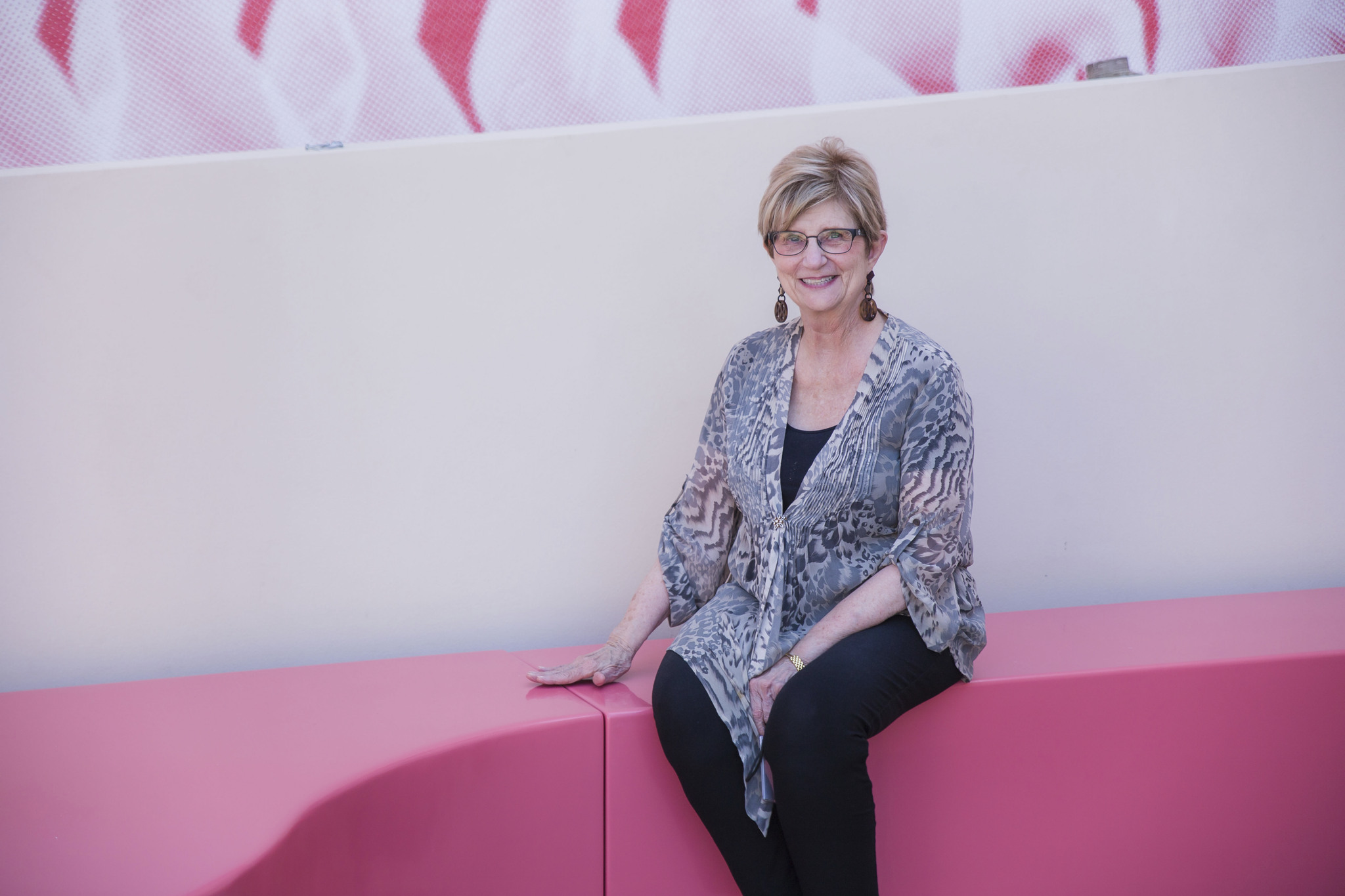
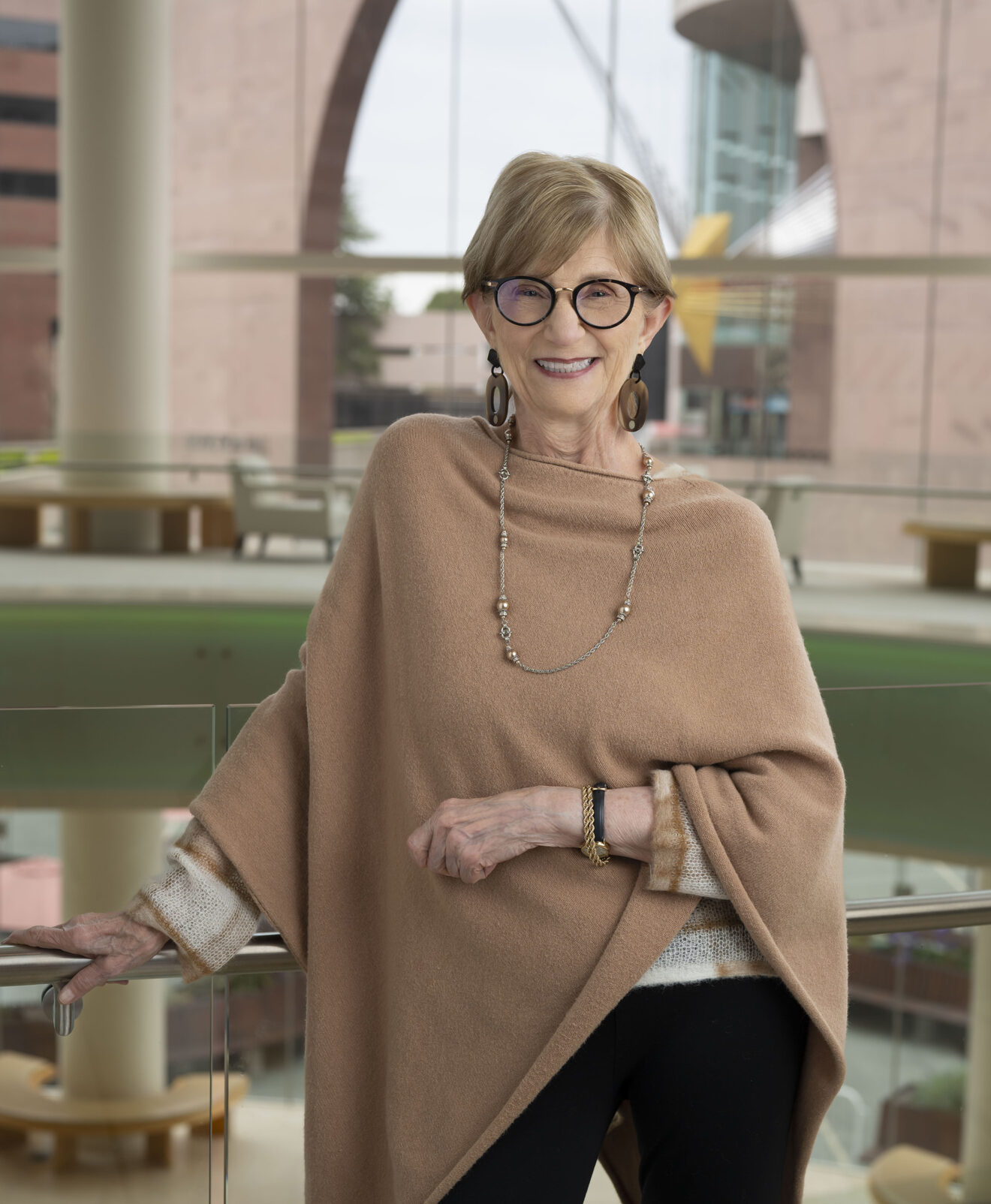
It was the first of many introductions she would make. Over the next four decades, Judith “Judy” Morr, who died Nov. 16 at 85, brought the world’s great dancers to Costa Mesa, built Segerstrom Center for the Arts into one of the nation’s leading dance presenters and gave Orange County a cultural calling card for business.
Along the way, the center presented nearly 2,000 productions, including more than 60 world premieres, 50 commissions and 64 visiting world dance companies.
“Judy singlehandedly spawned Segerstrom Center for the Arts’ world-class programming, especially in dance,” said Elizabeth Segerstrom, co-managing partner of C.J. Segerstrom & Sons and widow of the center’s founding chairman, Henry Segerstrom.
A Teacher Who Fell for the Stage
Morr’s road to Costa Mesa started in a junior high classroom.
Born in Racine, Wisconsin, and raised in South Chicago, she was teaching in Boston in the late 1960s, as the city’s schools went through desegregation, while earning a master’s degree in urban education at Simmons College.
On the side, she worked part time at the city’s Wilbur and Colonial theaters. The stage won out.
She moved to Washington, D.C., to join the newly opened Kennedy Center in 1971 and rose to general manager of theaters.
Her next move came by way of a colleague. When Henry Segerstrom and Strader went looking for someone to open Segerstrom Hall in 1985, they hired Tom Kendrick, the Kennedy Center’s director of operations. Kendrick had one request.
“Tom requested that we also hire his assistant, Judy Morr, to join him due to her skills and network of relationships,” Strader said. Kendrick became the center’s founding president, and he and Morr married about two years later. When he retired in 1993, she stepped away too, returning in 1996. Kendrick died in 2004.
Their first office wasn’t a theater at all. “It was a very small staff, and we were in the bank building across the street,” said Anne McNiff-Gaeta, the center’s director of group services.
“Through their attention to every detail we opened on time to rave reviews,” Strader said. The center opened Sept. 29, 1986.

Bringing the World to Costa Mesa
Morr oversaw the center’s dance programming from its very first season, and she played the long game. She booked U.S. companies at least two years ahead and international companies three to four years out.
When video and reviews weren’t enough, she got on a plane, as far as Russia and China, to see a company for herself.
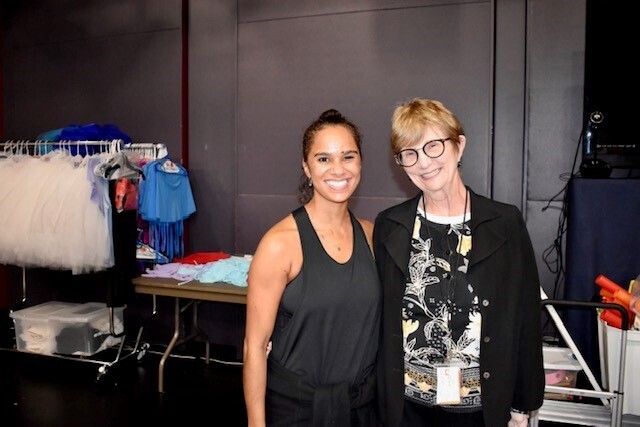
The roster read like a who’s who of international ballet: Rudolf Nureyev with the Paris Opera Ballet, the Mariinsky, the Bolshoi and the Mikhailovsky on its first U.S. tour, along with stars ranging from Russian ballerina Diana Vishneva to American Ballet Theatre’s Misty Copeland.
Once a company arrived, Morr was in the house. “For the first 20 years or so if not longer, she attended every show of every performance of every dance company, even if it was a seven- or eight-week performance run,” said Aaron Egigian, the center’s former interim vice president of programming.
Her care carried over to the cast parties. “It was fun to see these young, fit dancers enjoying a full buffet and then dancing to the contemporary piped-in music while Judy looked on as though they were her own children,” said Susan Strader, Tim’s wife and a former president of the center’s Angels of the Arts support group.
No company became more like family than American Ballet Theatre, which helped inaugurate Segerstrom Hall with Baryshnikov in 1986. ABT gave the world premiere of his Swan Lake at the Center in 1988. In 2015, it began an annual holiday run of The Nutcracker and, with the center, opened the ABT William J. Gillespie School on campus.
That bond grew “into one of ABT’s most important and enduring partnerships, thanks in large part to Judy’s leadership and unwavering commitment to artistic excellence,” said Susan Jaffe, ABT’s artistic director.
Where Art Met the Bottom Line
Morr understood that running a world-class performing arts center required an equal appreciation for art and economics.
“Judy’s phrase was, every decision is both a business decision and an artistic decision,” Egigian said.
Before any booking, she asked what it would cost and who the audience would be.
That steady hand mattered in 2019. When Center President Terry Dwyer left in February, Morr and Chief Financial Officer Brian Finck stepped in as co-presidents for about nine months, until Casey Reitz was named president and CEO that December.
The payoff reached well beyond Town Center Drive. “Segerstrom Center has been a valuable asset for Orange County and has helped the business community encourage senior executives and staff to locate here,” Strader said.
What Made Her Judy
Morr had a knack for keeping people steady when plans fell apart. One holiday season, singer Johnny Mathis fell ill hours before a sold-out show, and former Center President Jerry Mandel drew the job of telling 3,000 people.
Morr helped him write the speech. Just before he walked out, she told him it was good, but the audience could turn on him.
“I started to laugh and it relaxed me. It was her way to loosen me up,” Mandel said. “I survived and so did the Center: that was Judy.”
The former teacher never stopped thinking about students. She served on the board of Saint Joseph Ballet, now The Wooden Floor, and kept cheering on its CEO, Dawn S. Reese.
“She encouraged me and always said she was proud of me in my role as CEO,” Reese said.
When the ABT school opened, Morr reached out about a scholarship for Wooden Floor students. One scholarship recipient, accepted into the program at 11, now studies mechanical engineering at UC Irvine.
A Theater in Her Name
The board didn’t wait for Morr to retire. In 2014, it renamed Founders’ Hall the Judy Morr Theater, now home to the Gillespie School.
“Judy helped build this Center with a rare combination of vision, determination and love,” said Reitz. “Her care for artists and belief in this community helped make the Center what it is today.”
The spotlight was never her favorite place. When she became the first recipient of the Judy Morr Icon Award in 2024, she declined to speak at the luncheon. She smiled and waved, the Straders recalled. She retired that year but stayed on as an artistic adviser.
What drove her was the dancing itself.
“I want to be in that beautiful hall and be dazzled by the physical movement and the musicality of great choreography that takes you over,” she once said.
This year’s ABT Nutcracker will be dedicated to her. Morr lived in Newport Beach. She is survived by her daughters, Tania Morr and Kirsten Reynolds, and six grandchildren. A celebration of life will be announced later.