

Workplace evidence can disappear when an account closes or someone deletes a message thread. A dated record gives you a more precise account of unfair treatment than your memory does.
Document suspected discrimination with dated notes and records you’ve lawfully kept. Label any account you reconstruct after you lose access as a recollection. Follow the five steps: record incidents, classify conduct under FEHA protections for workers, build a chronology, preserve permitted records, and index witnesses with backups. FEHA is short for California’s Fair Employment and Housing Act.
What claims fall under FEHA protections for workers?
FEHA covers discrimination based on protected characteristics, workplace harassment, retaliation for protected activity, and failures to provide reasonable accommodation. The California Civil Rights Department says these employment protections cover public and private employers, as well as labor organizations and employment agencies.
The department’s employment guidance sets the general discrimination threshold at five employees; harassment protections also apply in smaller workplaces. The California Civil Rights Department’s 2023 Leadership Accountability Report lists approximately 28,000 complaints a year alleging discrimination or hate violence. Those complaints include issues outside employment.
The California Department of Finance reported a rise in the Civil Rights Department’s total complaints from 25,961 in 2022–23 to 33,505 in 2024–25 and projected 37,581 in 2025–26.
Those budget projections reflect the department’s overall workload, not findings against employers. CalHR’s 2023 state-civil-service complaint data offers a separate comparison; it covers state agencies, not all California workplaces.
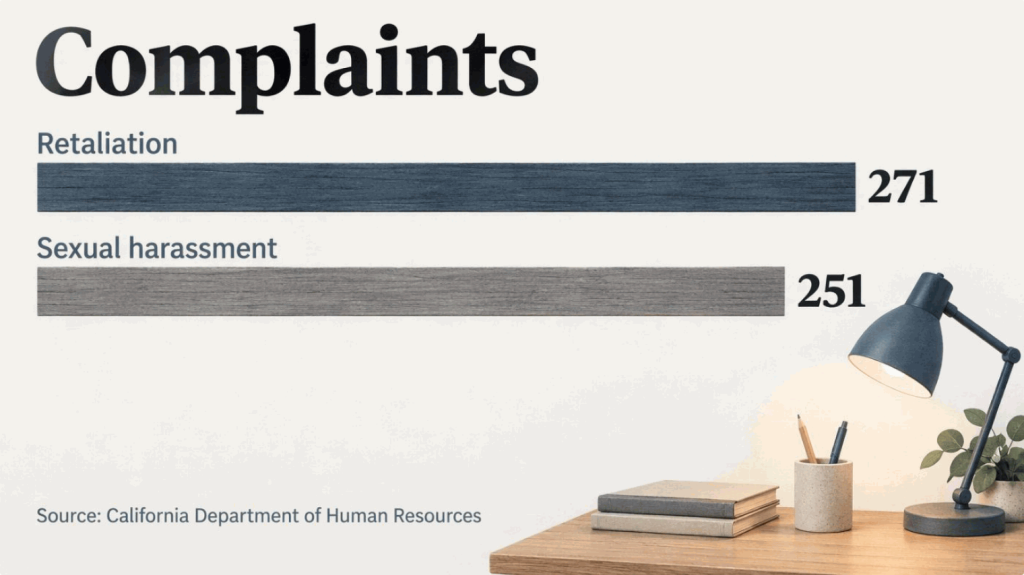
In 2023 California state-civil-service data, retaliation accounted for 271 complaints, or 13% of the total, while sexual harassment accounted for 251 complaints, or 12%, according to the California Department of Human Resources.
 Building a record before workplace evidence disappears
Keep one private file where you can add entries without changing earlier ones. A reader should be able to match each account with its date and supporting material.
Step 1: Record each incident promptly
Write a note as soon as you can after an incident, and separate what you observed from your interpretation. Record when and where the incident happened and who was there. Mark the date as approximate if you can’t remember the day, and explain what makes you uncertain. Describe what you were asked to do if your assignment changed, and explain how it differed from your usual duties.
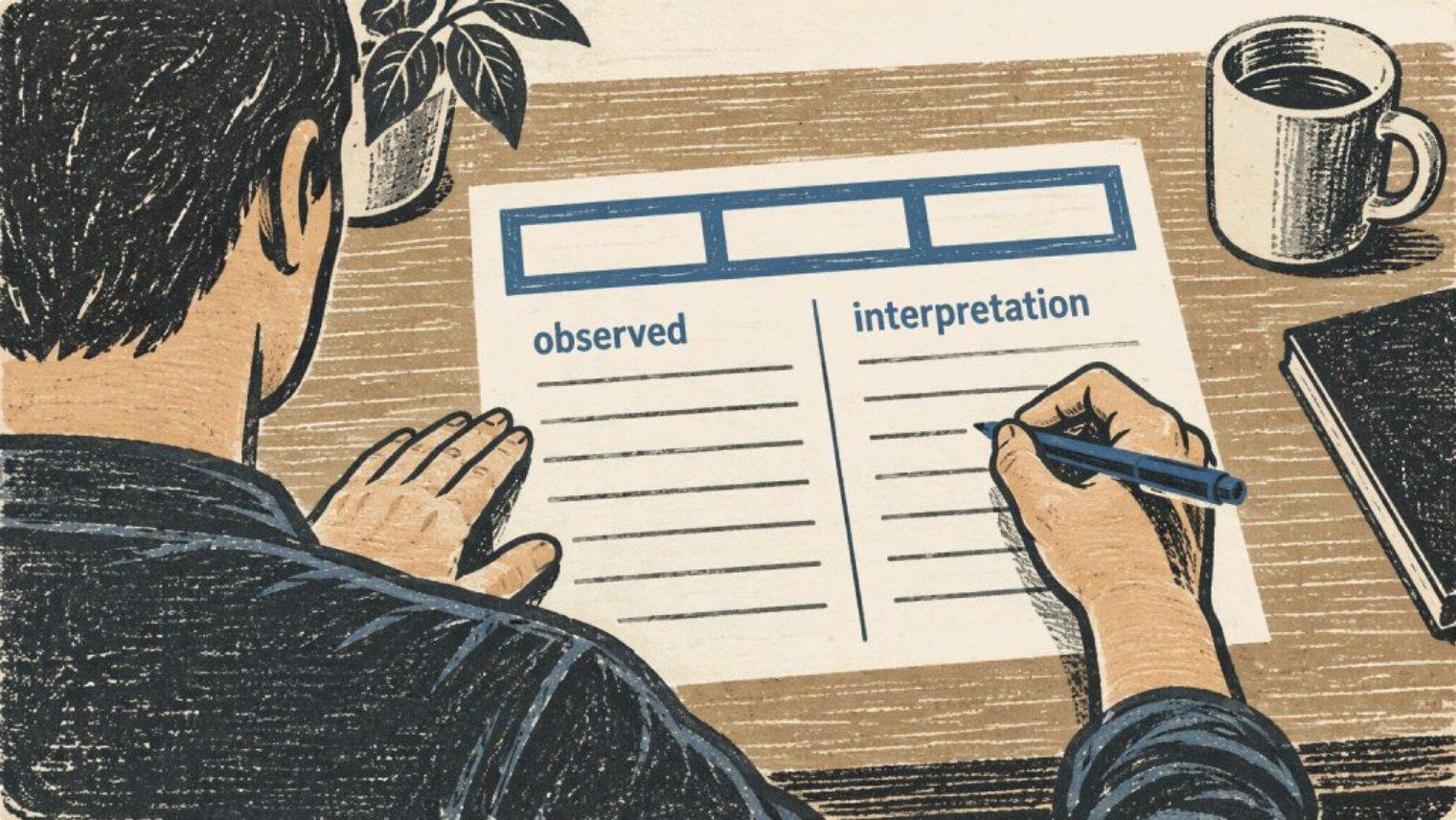 Describe the events rather than assigning a motive. You can observe that someone canceled a meeting, but your belief that your manager wanted you gone is an inference.
Step 2: Classify the possible workplace violation
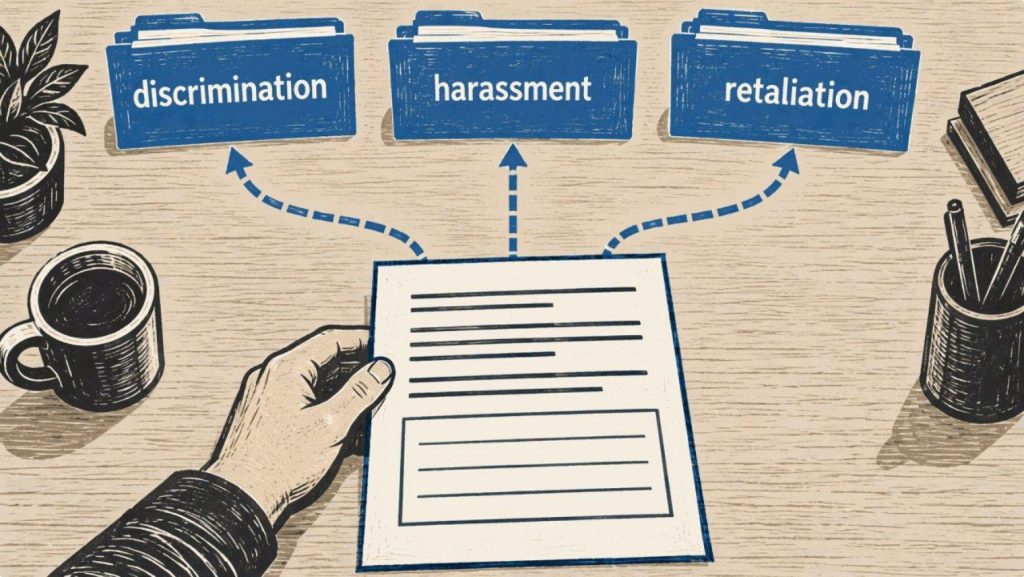
Classify the conduct under FEHA protections for workers by distinguishing discrimination, harassment, retaliation, and reasonable accommodation issues from disputes limited to unpaid wages or missed breaks.
Treat your chosen label as a working category. Fewer shifts after you reported discrimination may fit a retaliation account, but timing alone doesn’t establish the reason. Connect an accommodation request to the employer’s response as you document an accommodation issue. Leave room for the employer’s stated reason, even if you disagree with it. You can give an incident more than one possible category without creating duplicate entries.
 Step 3: Build a dated chronology
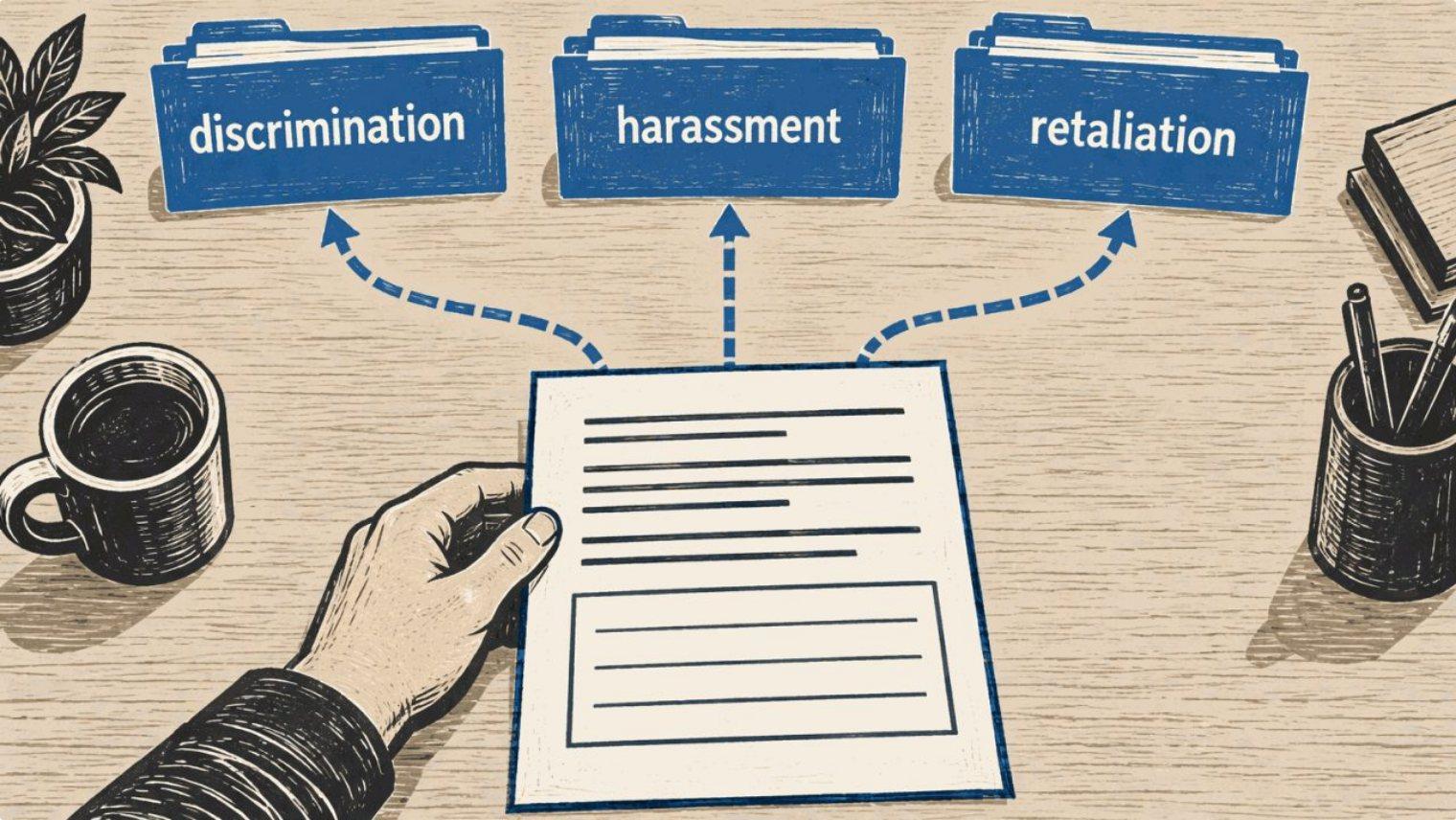
Build your chronology in the order events happened, keeping the sequence clear even if records arrive later. Assign each incident a short identifier, such as A01, and link that identifier to the corresponding files. Keep the event date distinct from the date you wrote the entry or obtained a document.
 An email mentioning an earlier conversation needs both dates in your chronology; don’t treat the email date as the conversation date. Make later corrections with dated additions rather than silently overwriting an earlier account. An unresolved date can stay marked as uncertain.
Step 4: Preserve records you may lawfully keep
Keep only records you’re entitled to possess, and ask for advice before copying anything you’re unsure you have the right to retain. Your work login doesn’t authorize you to take everything you can open with it.
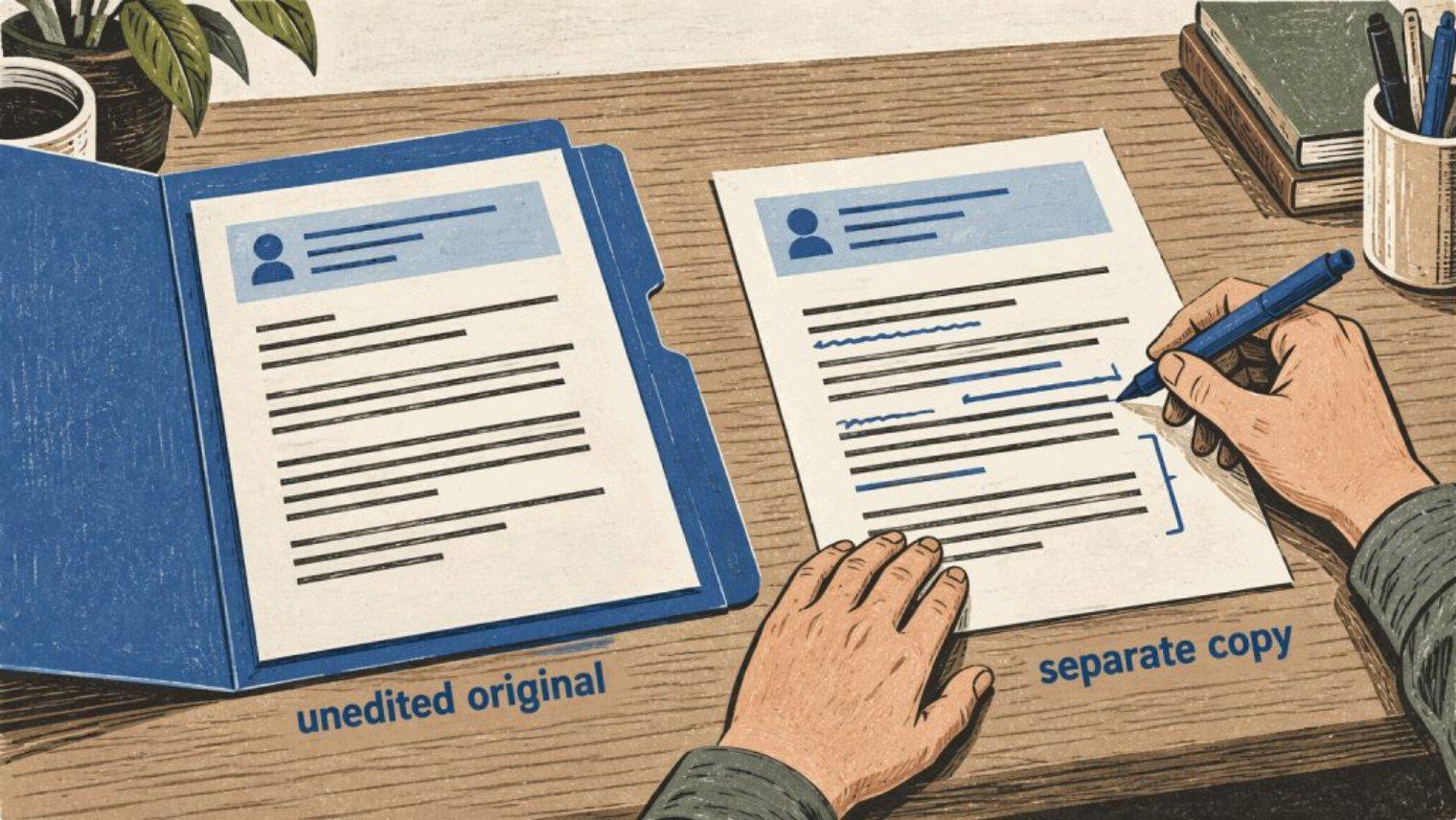 Keep an unedited original of a record you lawfully obtain, and put annotations in a separate copy. Retain the sender and recipient information along with message timestamps so an excerpt keeps its context. You can record a restricted document’s location without copying what it contains. Permission to keep a message doesn’t necessarily cover every attachment.
Step 5: Index witnesses and back up the evidence
Index witnesses by what each person directly observed, then back up your lawful file outside the systems your employer controls. Note a contact method you already have permission to use, along with each witness’s event identifier.
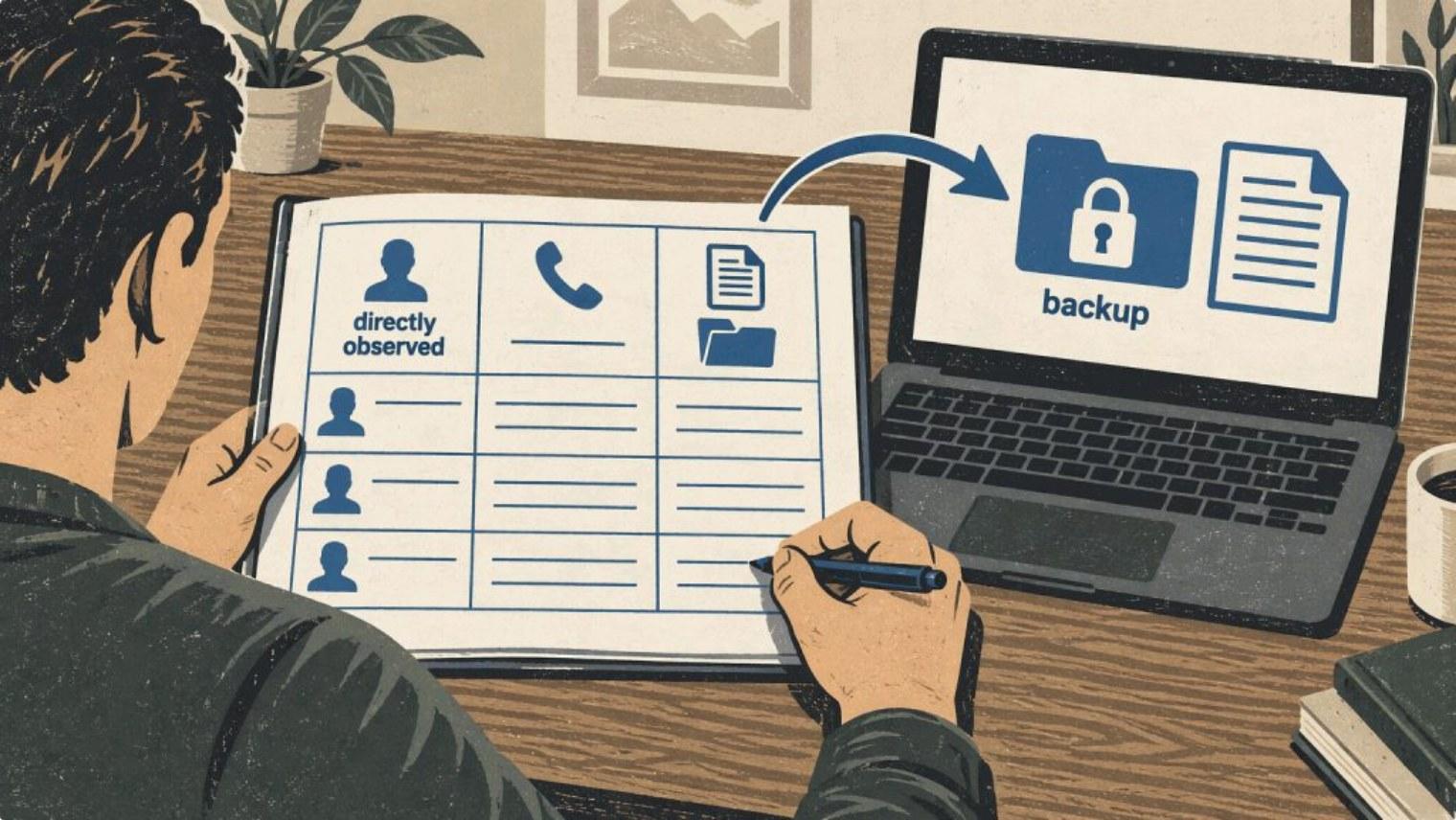 Someone who heard your account afterward knows something different from someone who witnessed the incident. Don’t coach anyone’s account or promise a witness will agree with you. Protect your backup with a password, and check whether the saved files open. Use a secure channel if you send your attorney a copy.
What records should I save if I think I have a FEHA claim in California?
Save pay records and schedules, along with performance reviews and policy documents you may lawfully keep. Add written communications and records showing changes in your duties or treatment. A document makes the strongest connection when it supports a specific event in your chronology instead of sitting unexplained in a folder.
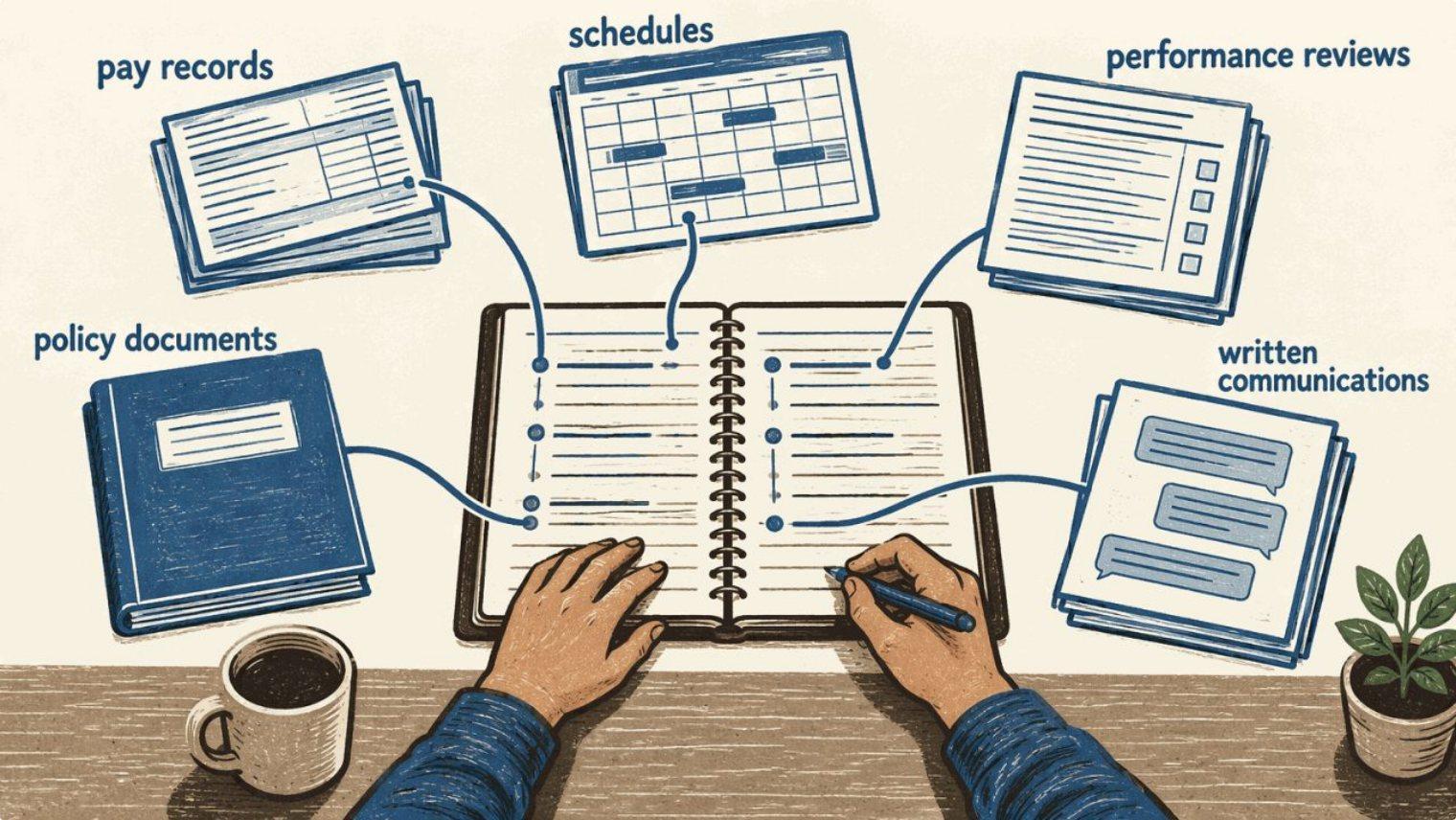 The conduct at issue determines which records you should save for a FEHA claim. A performance review can show an assessment from before a disputed demotion; a written policy can establish the rule your employer said it used. Keep a compact index that matches each incident’s date with the evidence addressing it.
| Incident and date | Supporting record | Witness | Follow-up |
| Hours reduced; date the change took effect | Your schedules and pay stubs before and after | Supervisor who communicated the change | Any written explanation |
| Accommodation request; date sent | Your request and the employer’s reply | Person who received the request | Any proposed adjustment |
| Verbal remark; incident date and note date | Your contemporaneous note | Anyone within hearing | Any later acknowledgment |
A contemporaneous note about a verbal remark captures your recollection close to the event, but it isn’t a transcript or independent confirmation. Keep words you remember separate from words you paraphrase. Treat a later message that acknowledges the conversation as a separate record with its own author and timestamp.
What if access disappears or several workers are affected?
Termination or a locked account doesn’t erase evidence you already lawfully possess. You may still be able to track down details of a lost message, such as its recipient or approximate send date. Entirely verbal conduct may have no written counterpart beyond your account and a witness’s recollection.
Workers affected by the same policy may have related accounts, but you can’t treat those experiences as interchangeable. Distinguish a decision you personally saw from an experience a coworker described, and attach that speaker’s name and the conversation date to the account. Don’t turn secondhand information into a statement that you personally witnessed the event.
Don’t bypass a disabled login or pose as another employee. Avoid unauthorized downloads and don’t remove confidential company material, including trade secrets or other employees’ personnel files.
Protect the record you can stand behind
Update your file through dated additions, and consider using your employer’s complaint process or filing with the California Civil Rights Department. An employment attorney can help you determine which route fits. Accurate documentation you’ve lawfully obtained won’t decide the claim by itself, but it gives you an account you can stand behind without taking material you have no right to possess.
The post How California Workers Can Document Discrimination Before Evidence Disappears appeared first on Newport Beach News.