
By David Cook, LMFT, Clinical Manager of Adolescent Mental Health Program at Hoag
When people talk about mental health and golf, they often cite the mental pressures of the game. As amateur golfer Bobby Jones famously said, “Golf is a game played on a five-inch course: the distance between your ears.”
But just as mentally challenging as the game can be, playing golf regularly also confers enormous mental health and stress management benefits.
The game demands that players focus, enjoy regular social interactions and get exercise and fresh air, all of which help lower stress and stave off depression.
Study after study has shown that spending time outdoors boosts serotonin and dopamine, those chemicals that make you feel calm and happy, while lowering cortisol, the stress hormone responsible for our fight-or-flight instincts.

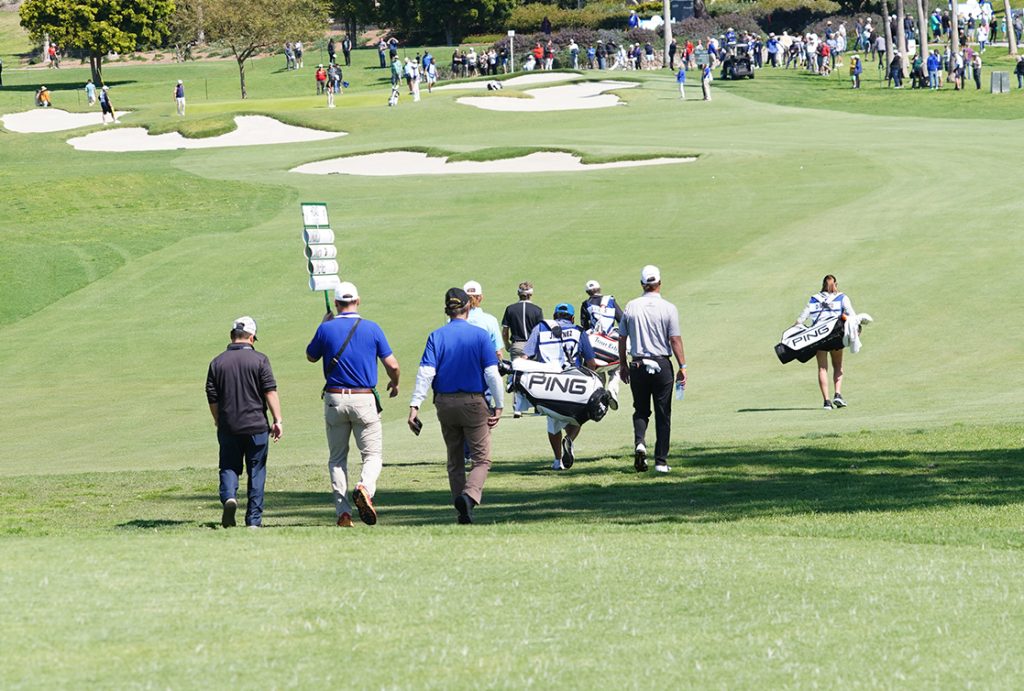
With open skies, rolling greens and water features, golf courses are like sanctuaries of serenity. Take, for example, the Hoag Classic, Orange County’s only official PGA TOUR Champions event. From March 22-29, golfers are treated to Newport Beach Country Club’s course overlooking the sun, surf, and sand.
And golf does more than get us to go outside. Walking from hole to hole (even if you’re spending more time at a hole than you’d like), keeps your body moving. An 18-hole course can easily add up to four or five miles—or roughly 10,000 steps per round.
This level of regular, moderate exercise can improve heart health as well as mental health by leaving a person feeling more invigorated, improving sleep and improving self-esteem (again, no matter what your golf handicap might be).
Golf also not-so-secretly serves as a form of therapy for many golfers. People step out with the same group for decades, spend 18 holes and four hours together, and leave feeling heard, seen and appreciated. Some licensed marriage and family therapists even recommend couples golfing as a way to encourage shared problem-solving and quality time together.
A recent survey reported fewer mental health issues than non-golfers, and 73.5 percent attributed those positive effects to the game. A significant 77 percent went so far as to recommend golf as a way to improve mental health.
The other benefit of golf is that it is adaptable to virtually all ages and abilities. This is part of what makes golf such a great outlet: You can play it for decades. Consistency, social connection, movement and time outdoors? This sounds like a prescription a specialist might write for someone contending with mental health issues.
That five-inch course between your ears is complex and difficult terrain. Participating in a sport like golf that is known to reduce stress, foster social connections and encourage movement will go a long way to helping you avoid the sand traps of depression and keep you out of the rough.
The post Finding Peace on the Fairway: Golf as Therapy for Mind and Body appeared first on Newport Beach News.