
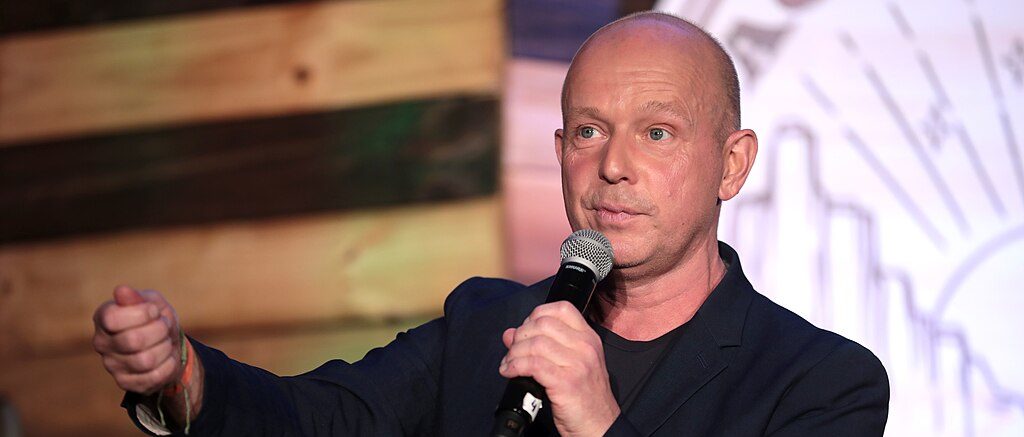
Steve Hilton, the British-born former Fox News host and failed 2026 Republican gubernatorial candidate, has endorsed State Sen. Tony Strickland for California Republican Party chair. The endorsement comes after both men just lost their own races. For today’s Blue Orange County audience watching the local and statewide GOP collapse in real time, this pairing is almost too perfect: one serial underperformer vouching for another.
Hilton entered the 2026 race with maximum fanfare. President Trump endorsed him. He raised millions. He tried the cheeky “anti-Trump but still vote for me” ads while simultaneously leaning on Trump’s brand. He advanced from the June primary with roughly 24.6% of the vote, edging out other Democrats and Republicans to face Xavier Becerra in the general. He made promises a governor could not keep ($3.00 gas).
The general election was a rout. Becerra won decisively with approximately 64–65% of the vote to Hilton’s 35–36%. Multiple outlets called the race almost immediately after polls closed. Hilton’s performance was not a near-miss or a respectable showing in a deep-blue state; it was a decisive rejection. He underperformed even relative to recent Republican baselines in California and failed to expand the party’s appeal beyond its shrinking core. Earlier in the cycle, the California Republican Party itself declined to give Hilton its formal endorsement at the spring convention. Riverside County Sheriff Chad Bianco received more delegate support (about 49% to Hilton’s 44%), and neither cleared the 60% threshold. Trump’s backing was not enough to unify even the party’s own activists.
Hilton’s campaign framed California’s problems as the product of one-party Democratic rule and positioned himself as the outsider who could “save” the state. Voters answered by electing Becerra, a longtime Democrat and former attorney general and HHS secretary, by a wide margin. The result continued the long streak of Republican statewide futility. No Republican has won a California governorship since Arnold Schwarzenegger.
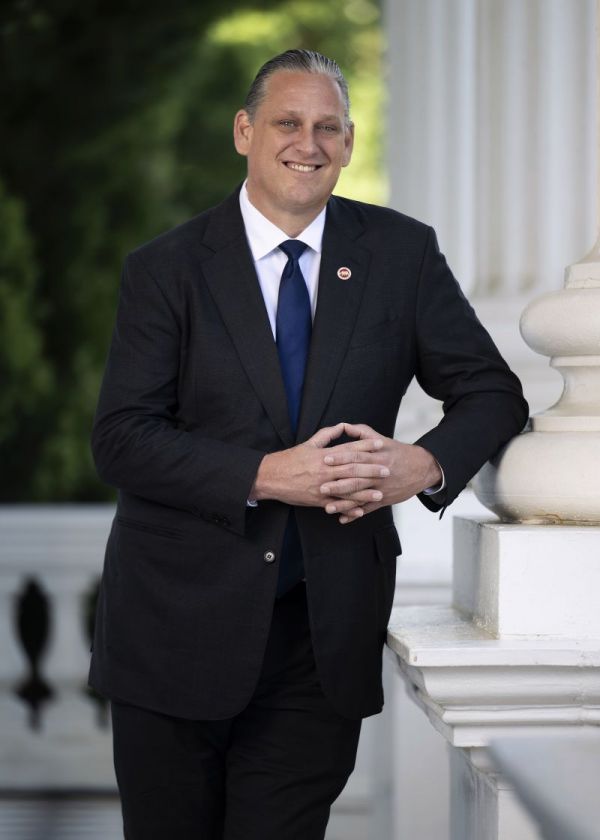
Tony Strickland, a Huntington Beach Republican who had returned to the State Senate, lost his reelection bid in the same 2026 cycle. He conceded after the numbers made clear he would not hold the seat. Within days of that loss and of Chairwoman Corrin Rankin’s decision not to seek another term, Strickland announced he was running for California GOP chair. He quickly collected endorsements from Rankin, some congressional Republicans, and now Hilton.
The optics are terrible for any party that claims it wants to win. A candidate who could not hold his own legislative seat is now asking to lead the statewide organization. Critics inside and outside the party have already labeled the move as careerism—an office-seeker looking for the next paid role after the voters said no. Hilton’s endorsement, coming from a man who just absorbed a 30-point defeat, does not strengthen the case; it highlights the circular nature of the California GOP’s current leadership class.
Strickland’s supporters point to fundraising ability and organizational experience. Those are real skills in party politics. They do not erase the central fact: in 2026, when Republicans needed every competitive seat they could hold, Strickland lost his. The party lost multiple Assembly seats and at least a couple in the Senate, further entrenching Democratic supermajorities. Handing the chairmanship to one of the cycle’s high-profile losers is not a signal of renewal.
Orange County has long been the last major Republican redoubt in coastal California. Even here the blue shift continues. Hilton’s final rally in Huntington Beach did not translate into a competitive statewide result, and local Republican losses compounded the sense of decline. A party that responds to a thumping by elevating people who just lost their own races is advertising that accountability is optional.
Voters do not need lectures on the structural advantages Democrats enjoy in California. The relevant point is narrower: when the opposition party’s most visible recent standard-bearers fail so thoroughly and then immediately install one of their own as the next organizational leader, it confirms that the GOP remains more focused on internal patronage than on building a broader coalition. Hilton’s post-election statement about needing a party that can “WIN” rings hollow when his own numbers were so poor and his preferred chair is a newly defeated incumbent. And we’ll get started on Will O’Neill after Thanksgiving.
The California Republican Party faces real strategic questions—candidate recruitment, voter registration in growing demographic groups, message discipline, and whether to keep circling the same narrow ideological lane that keeps producing 35% statewide results. Elevating Tony Strickland with Steve Hilton’s blessing does not answer those questions. It doubles down on the same personnel and the same recent track record of defeat.
Voters already rendered their judgment on both men in November. The party’s internal process will decide whether that judgment carries any weight. From the perspective of anyone who watches Orange County and California politics with progressive priorities, the Hilton–Strickland alignment is simply more evidence that the state GOP remains stuck in a cycle of loss, denial, and recycling of the same faces. That is not a formula for competitive politics. It is a formula for continued irrelevance at the statewide level and further erosion even in places that were once reliably Republican.