
By Aya El-Djoundi | Special to the NB Indy
At what point can you never come back from a lie? Is it when you’re in too deep that you start to feel ashamed of the truth? Or is it when you’re in so deep that you start believing in the lie yourself?
Maybe both.
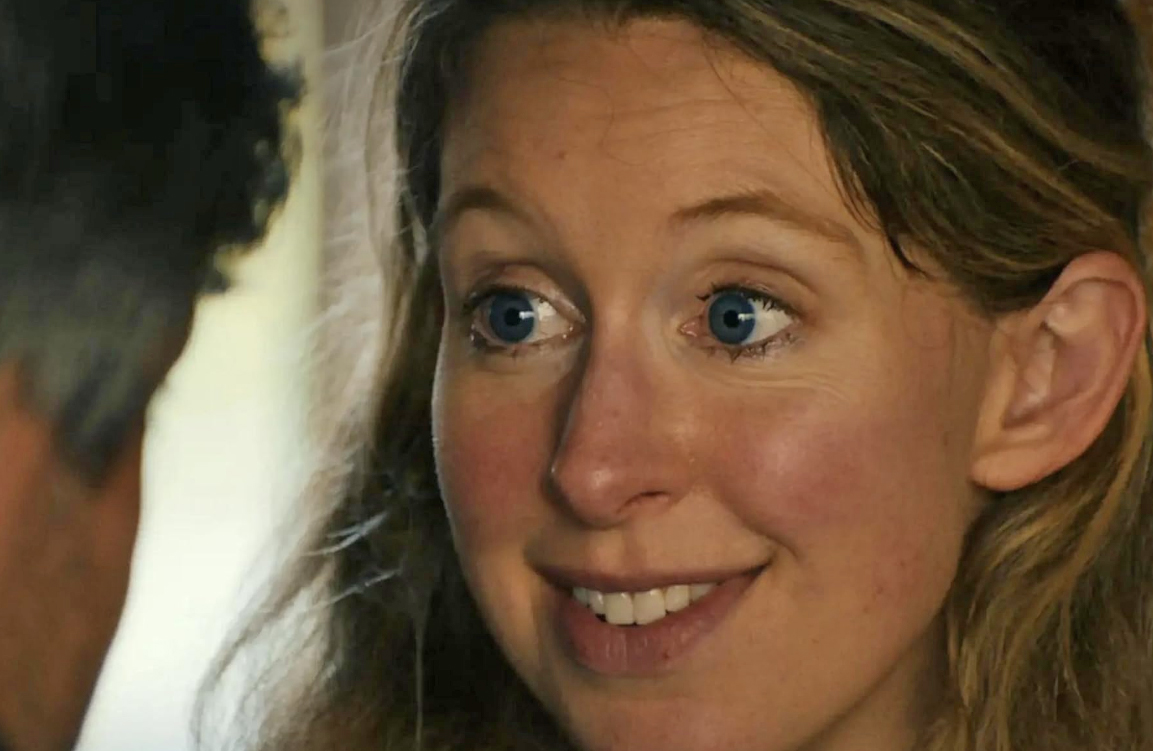
“You Can See Everything” is a documentary that follows entrepreneur Elizabeth Holmes, founder of the health technology company Theranos. Theranos was essentially a high-profile startup that allowed patients and customers to get full-body test results from a single drop of their blood. The company ran for years before it was discovered that the technology and everything behind it was fake.
Holmes was sentenced in November 2022 to 11 years and three months in prison plus three years of supervised release after being convicted of wire fraud and conspiracy involving Theranos.
Thirty days before beginning her prison sentence, Elizabeth agreed to have her life documented in this experimental documentary directed by Nathan Fielder and Lance Oppenheim.
What many people, including me, are trying to wrap our heads around is what’s real and what’s fake in “You Can See Everything.” Holmes had the whole world fooled for years about her company, Theranos. Throughout the documentary, she insists she hasn’t lied once in her life, even as she ultimately lies.
This documentary takes viewers on a gripping psychological interrogation between Fielder and Holmes. Fielder does a remarkable job of providing the audience with his chilling interactions with Holmes; you can see that even he was starting to believe her. He really started to feel for her, and audiences understood why. Fielder uses psychological techniques throughout the film to try and understand what is happening. We watch as Holmes pretends to be innocent while she pulls the strings to make us believe she is starting an innovative movement in modern medicine. She makes us believe she wants to help humanity, as she continues to plead that she isn’t in it for the money and that she genuinely wants to help.
Is she actually convinced she’s doing this for the right reasons?
For someone with such intellect, why would you use that ability for harm? She could have gone on to be a successful billionaire if the time and energy she spent scheming were used to make medical breakthroughs.
By the way she was acting and behaving, how did no one suspect her for years? With so little evidence, how did she make it this far? Why did this woman decide to hurt so many people when she actually could have helped?
Two conclusions: she started to feed into her own lies and thereby brainwashing herself, or she is just an evil human being.
The way this film draws you into a completely different world is an unforgettable experience that will leave you thinking about it for days. This documentary is much different than others. There is speculation that “You Can See Everything” could be nominated for Best Picture at the Academy Awards, which hasn’t happened with a documentary before.
But this isn’t just a documentary; it is a deep psychological exploration that pulls you away from reality. The way Elizabeth Holmes was behaving in this leaves you stunned—how can this woman be so convincing while acting absolutely clueless, ultimately knowing exactly what she was doing the entire time? She was charming, and the way she talked had audiences completely under her spell.
Throughout the film, Holmes sounds fully convinced that she knows what she’s doing, and she continues to push ahead without understanding the consequences she faces. At the same time, she is acting completely clueless. It’s like we are drawn into another reality with her. How can someone so well-spoken, charming and smart deceive us like this while claiming she isn’t?
What we are witnessing here is not the first time, nor the last, that we encounter someone who holds such psychological power that it puts humanity at risk. There is something dark going on in between the lines of innovative technology. As humans and citizens, we really need to start paying attention to whom we give power.
Bottom line, what Elizibeth Holmes has done here is criminal. It lasted for years, and when you really think about it, how much longer could this have gone on for if she was never caught? We aren’t just talking about investors and awards; we are talking about patients and consumers who believed in something that would help them be well. This is psychological torment.
This is a revolutionary time for documentaries. I really hope this one takes the best picture award because the world needs to see this. Not just for the Elizabeth Holmes story, but for all the other untold stories. While I was watching this documentary, I thought of something else that feels all too familiar that no one is insisting on investigating.
I hope this film is a lesson to society because Elizabeth Holmes isn’t the only master manipulator we have on our hands. This is like witnessing someone with a superpower, and unfortunately, using it to become the ultimate supervillain.
We are left wondering what will become of Holmes when she is released from prison. Will the world encounter Theranos 2.0, or will Holmes make amends with society?
“You Can See Everything” is playing at The Lot in Fashion Island.
The post ‘You Can See Everything’ Blurs the Line Between Deception and Delusion appeared first on Newport Beach News.