
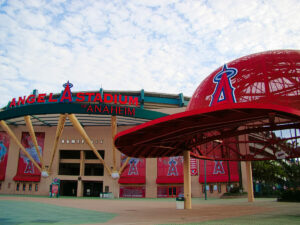
Stan Kroenke isn’t just buying a baseball team. He’s stepping into a decades-old redevelopment saga involving 150 acres of city-owned prime real estate that includes Angel Stadium and its surrounding parking lots.
Last week, his Kroenke Sports & Entertainment firm agreed to acquire a controlling stake in the Los Angeles Angels from Arte Moreno, who has owned the team since 2003 and faced mounting pressure to sell the underperforming franchise.
The deal reportedly values the Angels at $4 billion. The Business Journal estimated the franchise was worth $3.3 billion in July while Forbes pegged the club’s value at $2.8 billion in March.
Kroenke won’t own the 150 acres, but he will inherit the Angels’ lease at the city-owned stadium—prime real estate in the middle of Orange County and one of the most visited cities in America.
The pending sale reignites a question that has lingered over Anaheim for more than 30 years: Can Kroenke succeed where the city, the Walt Disney Co., and Arte Moreno fell short by turning the aging “Big A” and the adjacent land into a vibrant, mixed-use sports and entertainment district?
The 79-year-old billionaire, who built his $24 billion net worth through a prominent career in real estate development and his marriage to a Walmart heiress, has already demonstrated what can happen when a professional sports franchise becomes the anchor of a much larger development.
After bringing the Rams back to Los Angeles, he built SoFi Stadium and the surrounding 300-acre Hollywood Park mixed-use district in Inglewood.
The Angels acquisition could extend that development playbook into Orange County.
That makes Anaheim Mayor Ashleigh Aitken hopeful.
Aitken told the Business Journal that the pending change in ownership presents new possibilities for the city and the surrounding stadium land.
“As a lifelong Angels fan, I feel like it’s Christmas in September,” Aitken told the Business Journal.
Kroenke Sports officials have not announced any plans for Angel Stadium or the surrounding property. Forbes reported that Kroenke plans to replace the aging stadium with a $2.5 billion new ballpark—a story the publication has since retracted.
An Angels spokesperson told the Business Journal that its leadership will not be available for interviews until the sale process is completed, which is expected in the first quarter of 2027.
Reading Between the Lines
The press release announcing the deal offered a clue about what Kroenke might have in mind.
Rather than wax poetic about buying the Angels, the franchise’s history or hopes of bringing another championship to Anaheim, Kroenke Sports & Entertainment highlighted Kroenke’s ownership of the Los Angeles Rams and development of SoFi Stadium and the surrounding 300-acre Hollywood Park district in Inglewood, which will host Olympic and Paralympic events in 2028.
It’s a compelling playbook. He bought the Rams, built them a new stadium and they won. Now, Hollywood Park is both a community asset and a global sports destination.
Kroenke Sports officials said the Angels acquisition will extend that footprint south to Orange County into a market of more than 3 million residents with “its own distinct civic identity, corporate base and tourism economy.”
Aitken said the potential is there.
Built in 1966, Angel Stadium sits squarely inside Anaheim’s 820-acre Platinum Triangle District, which also encompasses the Honda Center, the ARTIC transportation center, high-density residential and commercial developments and the $4 billion OCVibe project currently under construction.
The ballpark is also located just a few miles from the Disneyland Resort—Orange County’s largest employer and the primary driver of the city’s more than 26 million annual visitors.
“There’s a lot of opportunities to really look at that property and see how we can maximize that in the best interests of Anaheim residents,” Aitken said.
The City’s Failed Plans
The idea of transforming the roughly 20-acre Angel Stadium and its surrounding 130 acres into something more isn’t new.
It’s what Anaheim officials have wanted to do for more than three decades.
In the mid-1990s, after the Rams left Anaheim for St. Louis, city officials envisioned creating “Sportstown Anaheim,” a sports and entertainment district connecting Angel Stadium with the Pond, now Honda Center.
It was the city’s attempt to lure back an NFL team.
The plan included themed areas for hotels, shops, offices, youth sports fields, and even a Western village and rodeo arena — as a type of tribute to former Angels owner Gene Autry, known as the “Singing Cowboy.”
The city pitched Disney, which acquired the Angels in 1996, about developing the project.
Disney passed. The company was expanding the resort area, constructing Disney California Adventure, Downtown Disney and the Grand Californian Hotel.
The city selected Cleveland-based developer Forest City Services, but they dropped the project, citing the challenge of overcoming Disney’s entertainment options and a lack of interest from prospective national tenants.
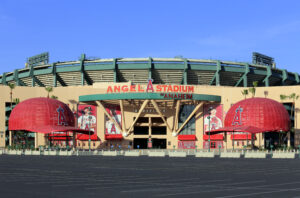
Disney spent approximately $118 million renovating Angel Stadium. Completed in 1998, the overhaul introduced many of the stadium’s signature features fans see today—including the artificial rock-and-waterfall “Outfield Extravaganza” that shoots fireworks after home runs, an upgraded video scoreboard, expanded club seats and luxury suites, and the oversized Angels caps flanking the main entrance plaza.
The nearly 60-year-old stadium has not undergone a renovation of that scale since.
The city once again tried to redevelop the stadium land, bringing in Tinseltown, an interactive dinner theater, which eventually became The DigAlert Grove of Anaheim.
City officials also signed a deal with the operators of Gotcha Glacier, an indoor snow-themed resort that would have allowed visitors to ice skate, ski and snowboard year-round.
That project lost funding and soon melted away.
Moreno’s Redevelopment Idea
After acquiring the Angels from Disney in 2003, Moreno faced the long-standing question of how to handle the aging, city-owned stadium and its surrounding parking lots.
For nearly a decade, Moreno and Anaheim officials sparred over who should fund hundreds of millions of dollars in deferred maintenance and how to redevelop the site.
A $1-a-year stadium lease proposal, which would have allowed Moreno to develop around the ballpark to fund the renovations, fell through spectacularly after much political and community uproar.
The often-bitter negotiations culminated in a 2019 agreement to sell the 150-acre stadium and surrounding lots to Moreno’s commercial real estate entity, SRB Management, for $320 million.
Moreno’s group proposed transforming the property into a massive mixed-use district anchored by a renovated or replacement ballpark, multifamily homes, hotels, offices, restaurants, retail, and public open space.
A developer would need to build a tall parking structure or multiple structures to meet the stadium’s 12,500 parking requirements.
According to city records, Moreno’s plans called for as many as 5,175 apartments, 2.7 million square feet of office space, 578,000 square feet of retail and 943 hotel rooms, along with restaurants and public open space.
It was the outcome Moreno and the city had sought.
But the state squashed the sale after finding Anaheim had violated the Surplus Land Act by negotiating exclusively with the Angels without first making the publicly owned land available for affordable housing development.
As the city sought to resolve the dispute with the state, an FBI corruption investigation implicated then-Mayor Harry Sidhu in a suspected pay-to-play scheme.
An FBI affidavit alleged that Sidhu expected to receive a $1 million campaign contribution from the Angels after providing the organization with confidential information during stadium negotiations. Sidhu resigned and later pleaded guilty and was sentenced.
The City Council subsequently voted to void the sale. Neither Moreno nor any Angels officials were charged with wrongdoing.
The city has since put the stadium redevelopment on the back burner.
Kroenke Has a Winning Record
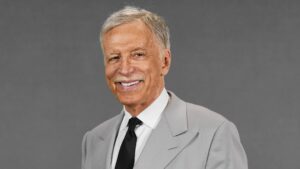
Kroenke appears to be fulfilling his baseball destiny—the only sport missing from his professional collection.
According to MLB, baseball has been part of his identity since birth: his full name, Enos Stanley Kroenke, pays homage to St. Louis Cardinals Hall of Famers Enos Slaughter and Stan “The Man” Musial.
Few professional sports owners can match Kroenke’s level of success in sports and real estate.
Forbes estimates the 79-year-old billionaire’s net worth at $24.3 billion. His wife, Walmart heiress Ann Walton Kroenke, is worth another $14.1 billion.
The Rams captured Super Bowl LVI at their home stadium in 2022 and enter this season favored to win another championship. The Colorado Avalanche won the Stanley Cup in 2022, followed by the Denver Nuggets’ first NBA championship in 2023. Arsenal claimed the Premier League title this year, ending a 22-year drought.
That record bodes well for the Angels.
But Kroenke’s extensive real estate experience could prove just as valuable to Anaheim.
After moving the Rams back to Los Angeles from St. Louis, he developed SoFi Stadium as the anchor of Hollywood Park, redeveloping a former racetrack into a nearly 300-acre mixed-use sports and entertainment district in Inglewood.
The $5.5 billion project includes the 70,000-seat SoFi Stadium, YouTube Theater, offices, shops, homes and other entertainment spaces.
SoFi Stadium has already hosted a Super Bowl, a college football National Championship and World Cup matches. It is also set to play a major role in the LA28 Games and host the 2027 Super Bowl.
A New Opportunity
Kroenke will inherit a stadium lease that keeps the Angels in Anaheim through 2032, with options for six additional years.
Aitken told the Business Journal that his arrival presents opportunities but cautioned that any stadium deal faces significant hurdles. The city owns Angel Stadium and the surrounding property, and any redevelopment must comply with California’s Surplus Land Act.
“Our council has been very clear that we are going to follow state law in the development of that stadium,” Aitken said.
Aitken also said she’d welcome a name change from Los Angeles to Anaheim after the so-called “Home Run for Anaheim Act” passed.
“I think it’s not only a matter of civic pride and respect,” she said. “But it’s also a matter of superstition in that the last, and only, team to win a World Series had Anaheim in the name.”
The Anaheim native and lifelong Angels fan also has a personal wish list for the property: affordable and “missing middle” housing, a youth sports park, open space, hotels, arts facilities and public spaces that complement OCVibe across the street.
“There are so many opportunities,” she said, while stressing that it is too early to discuss specific plans.
The city will not begin talks with Kroenke while the sale remains pending and subject to Major League Baseball approval. If the transaction closes, however, Aitken said City Hall would be ready.
“If the sale goes through and the opportunity presents itself, I know my council colleagues and I would be very interested in sitting down with the organization and seeing if their priorities align with our own,” Aitken said.
A Golden Decade is Coming
The potential change in Angels ownership comes as billions of dollars of investment are reshaping Anaheim.
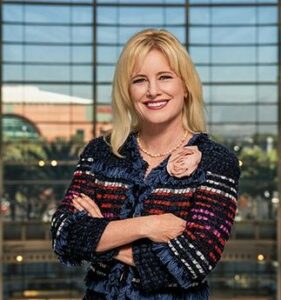
“The next 10 years in Anaheim is going to be a golden decade,” Aitken told the Business Journal.
The Samueli family, the owner of the Anaheim Ducks, is pouring in $4 billion to develop OCVibe, a 100-acre mixed-use live, work, play entertainment district that includes 1.1 million square feet of office space, 230,000 square feet of retail, a 5,000-seat concert hall, 2,200 apartment units, 20-acres of public space and more. The family is also investing an additional $1 billion to improve and upgrade the city-owned Honda Center.
At the same time, the Walt Disney Company is moving ahead with its multibillion-dollar DisneylandForward expansion a few miles away. The city approved the project in 2024 as part of a deal that requires Disney to invest at least $1.9 billion in visitor attractions and lodging within the first 10 years.
Redeveloping the Angel Stadium adds more fuel and could speed up the city’s plan to turn the Platinum Triangle, once an industrial area, into a vibrant mixed-use district for sports, entertainment and housing.
Aitken said transportation will be “the next hurdle” as the city grows, with city officials seeking alternatives that don’t leave residents and visitors dependent on just automobiles.
Maximizing the Anaheim Regional Transportation Intermodal Center (ARTIC), which sits between the Honda Center and Angel Stadium, will be a big part of those transportation conversations.
She sees these investments and the possibility of working with new Angels ownership as part of a larger transformation for Anaheim.
With Disneyland expanding, OCVibe growing near Honda Center, and possibly a new chapter at Angel Stadium, Aitken believes Anaheim is finally close to becoming what it has long wanted to be.
“We are going to be the new downtown of Orange County,” she said.
Angels: A Decade of Heartbreak
The potential sale of the Angels ends the embattled 80-year-old Arte Moreno’s 23-year tenure with the team, a period that began with several successful seasons before falling into one of Major League Baseball’s longest stretches of futility.
Moreno, a Vietnam veteran and advertising tycoon from Arizona, built his fortune by taking Outdoor Systems public and later selling it to Infinity Broadcasting Corp. for about $8 billion in 1999.
In 2003, just a year after the Angels won their only World Series, Moreno became baseball’s first Latino owner by buying the team from the Walt Disney Company for $183.5 million.
The Angels initially flourished under Moreno.
He lowered beer prices and invested heavily in star players like Vladimir Guerrero and Albert Pujols, helping the team become a regular contender.
The Angels won five American League West division titles from 2004 to 2009.
But success didn’t last.
Even with stars like Shohei Ohtani and Mike Trout, the Angels could not build a consistent winner due to poor-high-priced free-agent choices, injuries, pitching problems and one of the weakest farm systems in the league.
The Angels have not reached the playoffs since 2014.
Ohtani left the Angels after the 2023 season for the rival Los Angeles Dodgers, where he has since won back-to-back World Series titles.
Meanwhile, the Angels kept losing, and Trout, once Ohtani’s running mate, has dealt with injuries and more losing seasons.
This season, the team became just the 16th in Major League Baseball history to have 11 consecutive losing seasons.
Arte Moreno: A Winner Off the Field
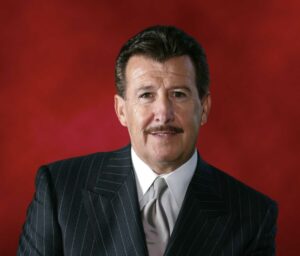
Fans of the Los Angeles Angels have long criticized owner Arte Moreno for the team’s dismal play in the past decade.
However, Moreno won off the field with his astute purchase of the Angels for $183.5 million in 2003. By some accounts, the team is being sold for $4 billion.
To use Peter Lynch’s terminology when he described investment home runs, Moreno scored a 22-bagger.
Peter J. Brennan contributed to this report.